
Reconciliation initiatives
The City of Adelaide is located on the traditional Country of the Kaurna people. We pay our respect to elders past and present.
We recognise and respect their cultural heritage, beliefs and relationship with the land. We acknowledge that they are of continuing importance to the Kaurna people living today. And we also extend that respect to other Aboriginal Language Groups and other First Nations.
Council leads the way in reconciliation
The City of Adelaide is proud of, and values the oldest continuing culture in the world, the Aboriginal people. In 1997, the council was among the first councils in Australia to sign a Reconciliation Statement.
In 2012, the then Lord Mayor Stephen Yarwood, and Yvonne Agius, Reconciliation Committee Chairs, signed a Reconciliation Vision Statement and later a National Sorry Day acknowledgement. Both these documents are displayed in the Council Chambers, and in Mankurri-api Kuu / Reconciliation Room in the Town Hall, as a symbol of council’s ongoing commitment to reconciliation.
Reconciliation Action Plans
The City of Adelaide embarked on a journey of reconciliation with local Aboriginal and Torres Strait Islander communities in 1997. In May 2008, Council adopted its first Reconciliation Action Plan (RAP), which provided a framework for the inaugural implementation of Council’s Reconciliation Vision Statement and National Sorry Day Acknowledgement to earmark our journey. The City of Adelaide has had a long standing, positive working relationship with the Kaurna community as the Traditional Owners and Custodians of the Adelaide Plains, on which the city is located and Council continue to work closely with the Kaurna Yerta Aboriginal Corporation as the peak body of cultural authority throughout the RAP development process. While there is still more to do, we are excited to reflect on the past 13 years of RAPs and are looking forward to our ongoing progressive journey with Aboriginal and Torres Strait Islander communities.
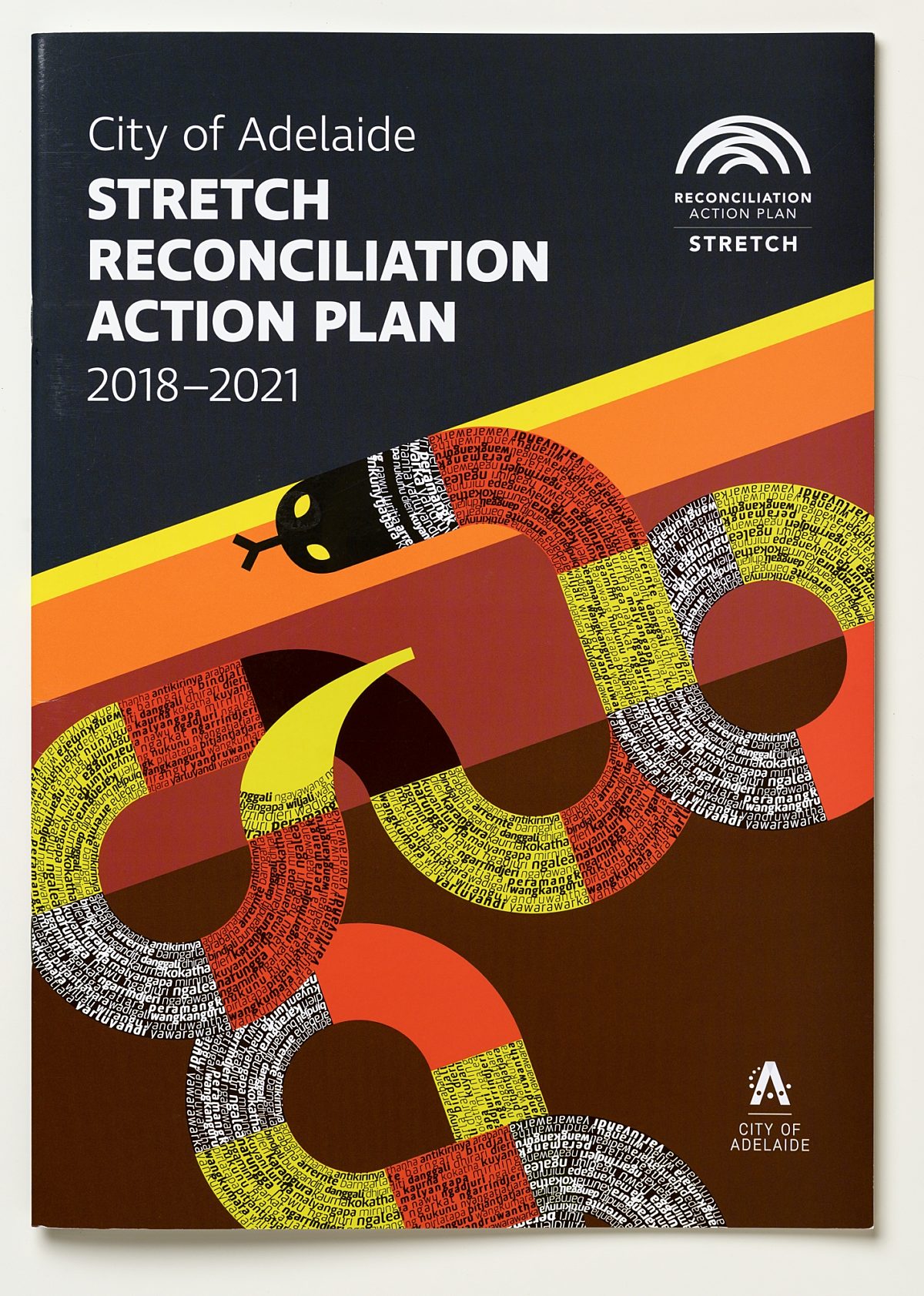
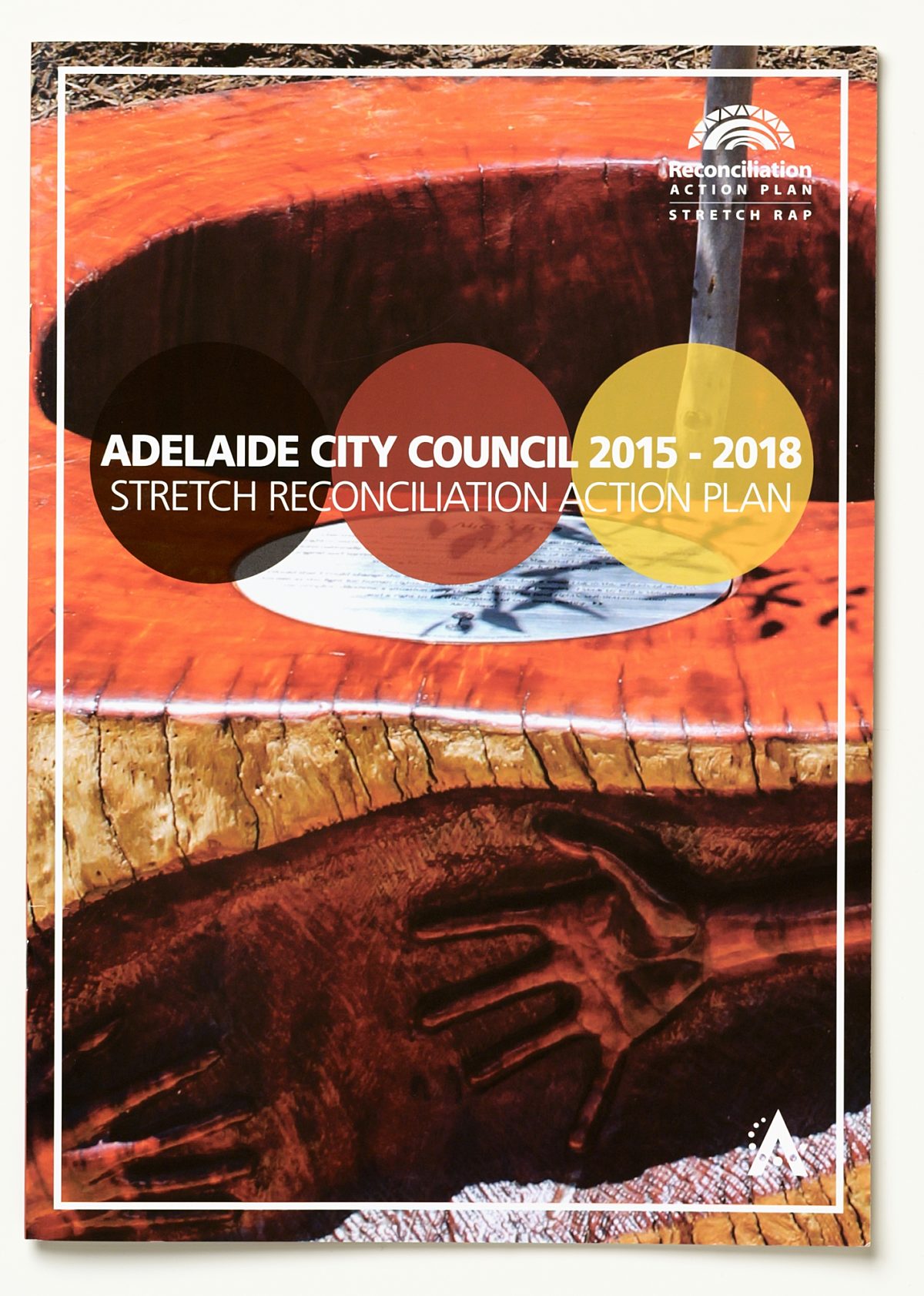
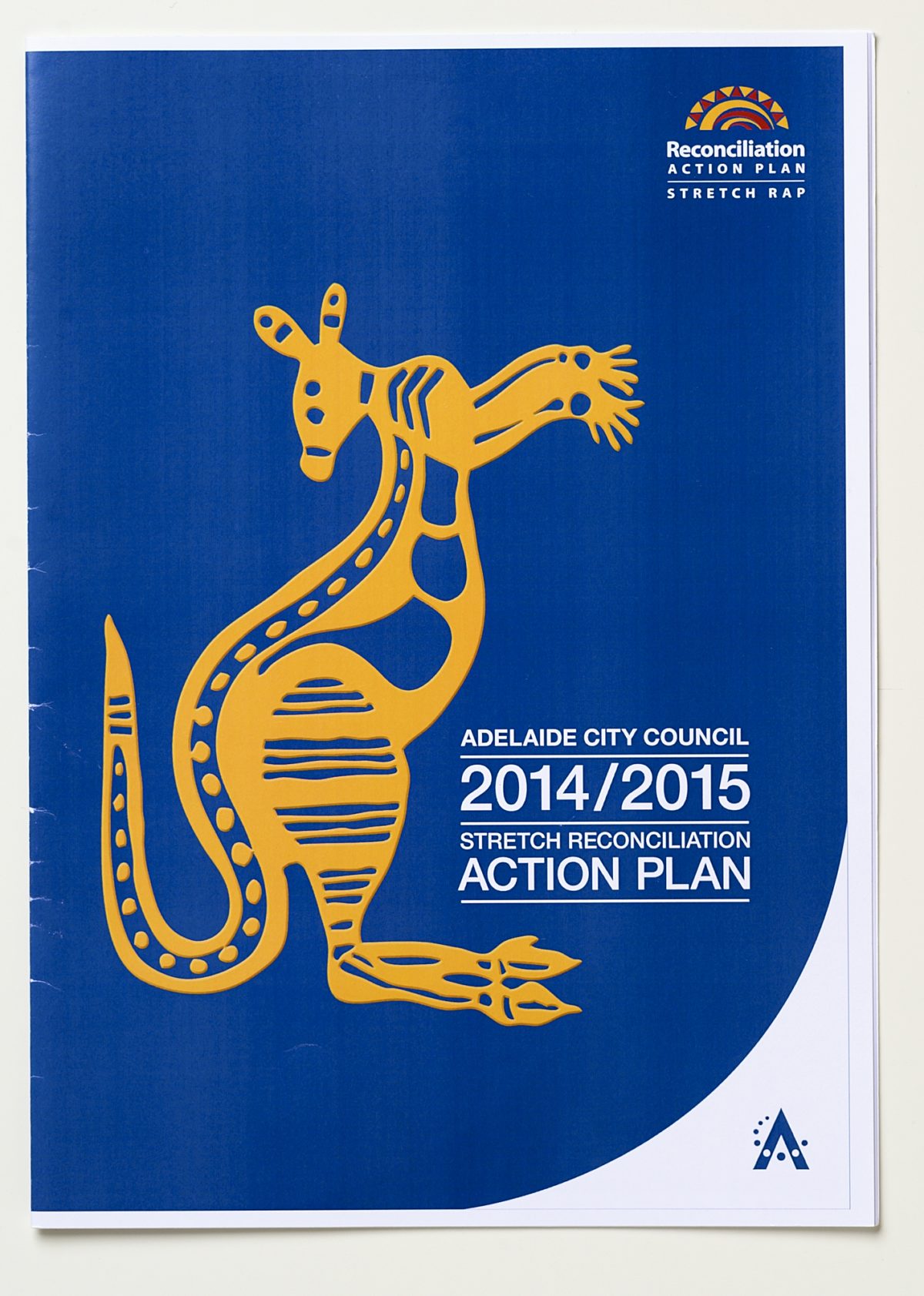
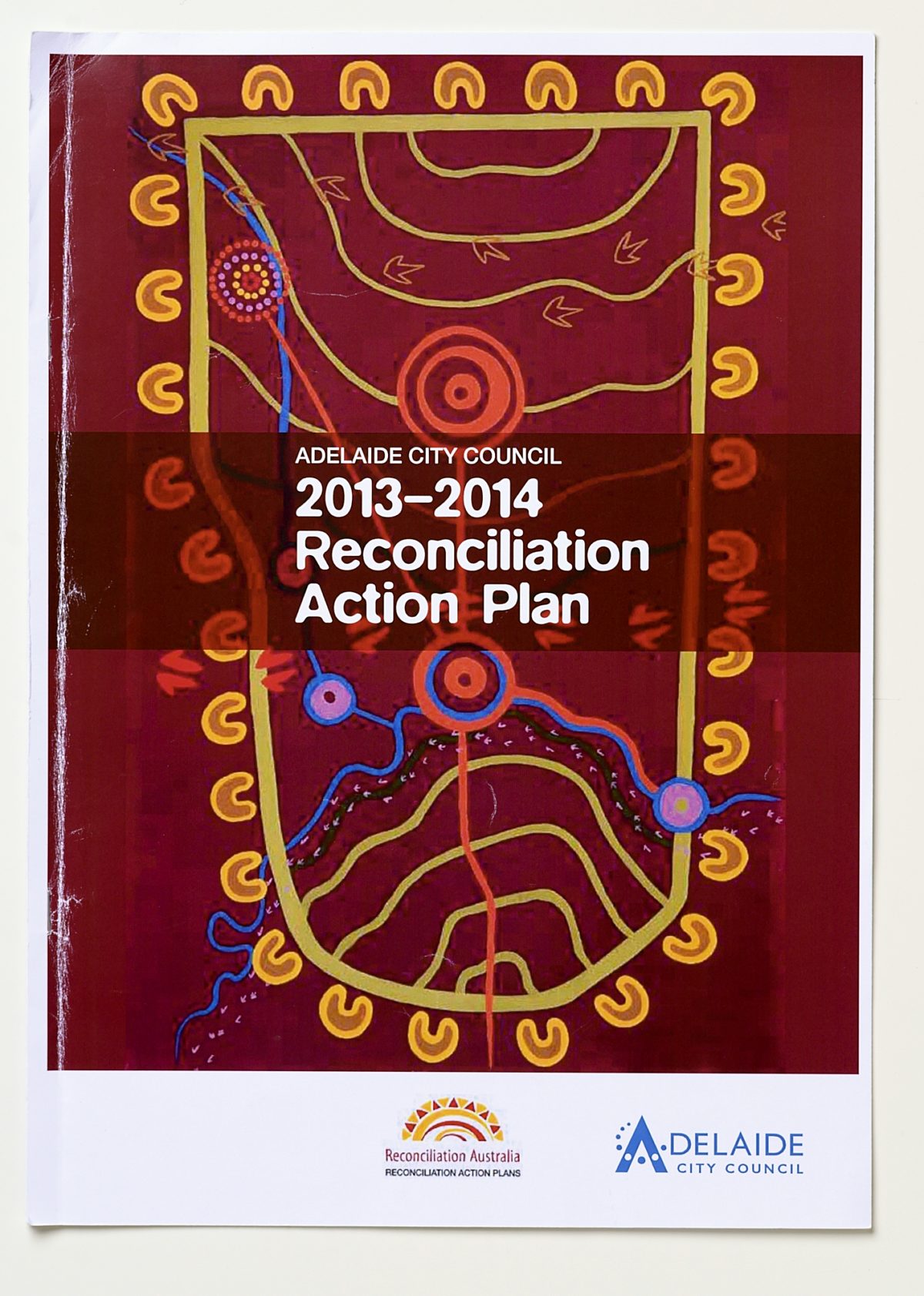
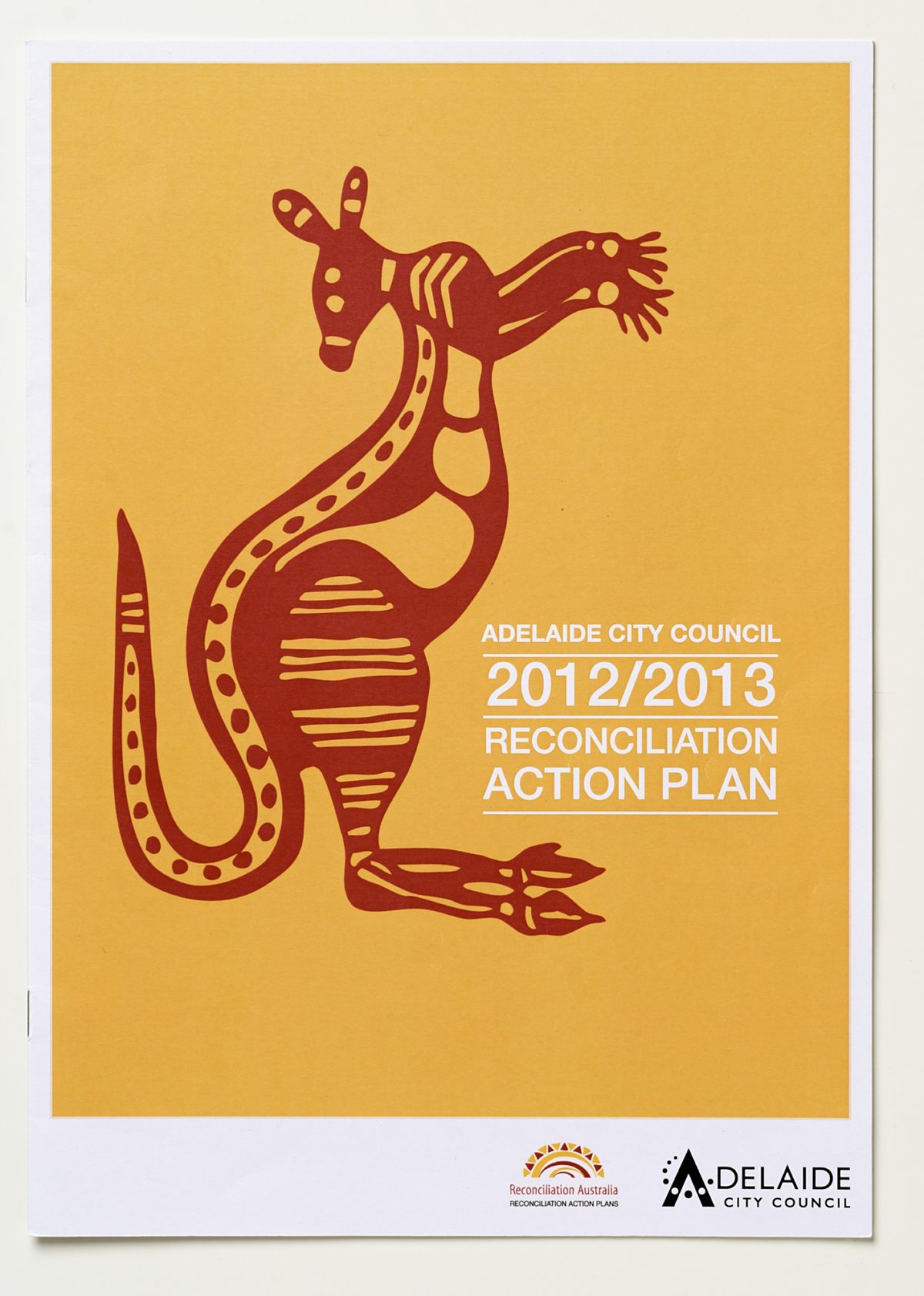
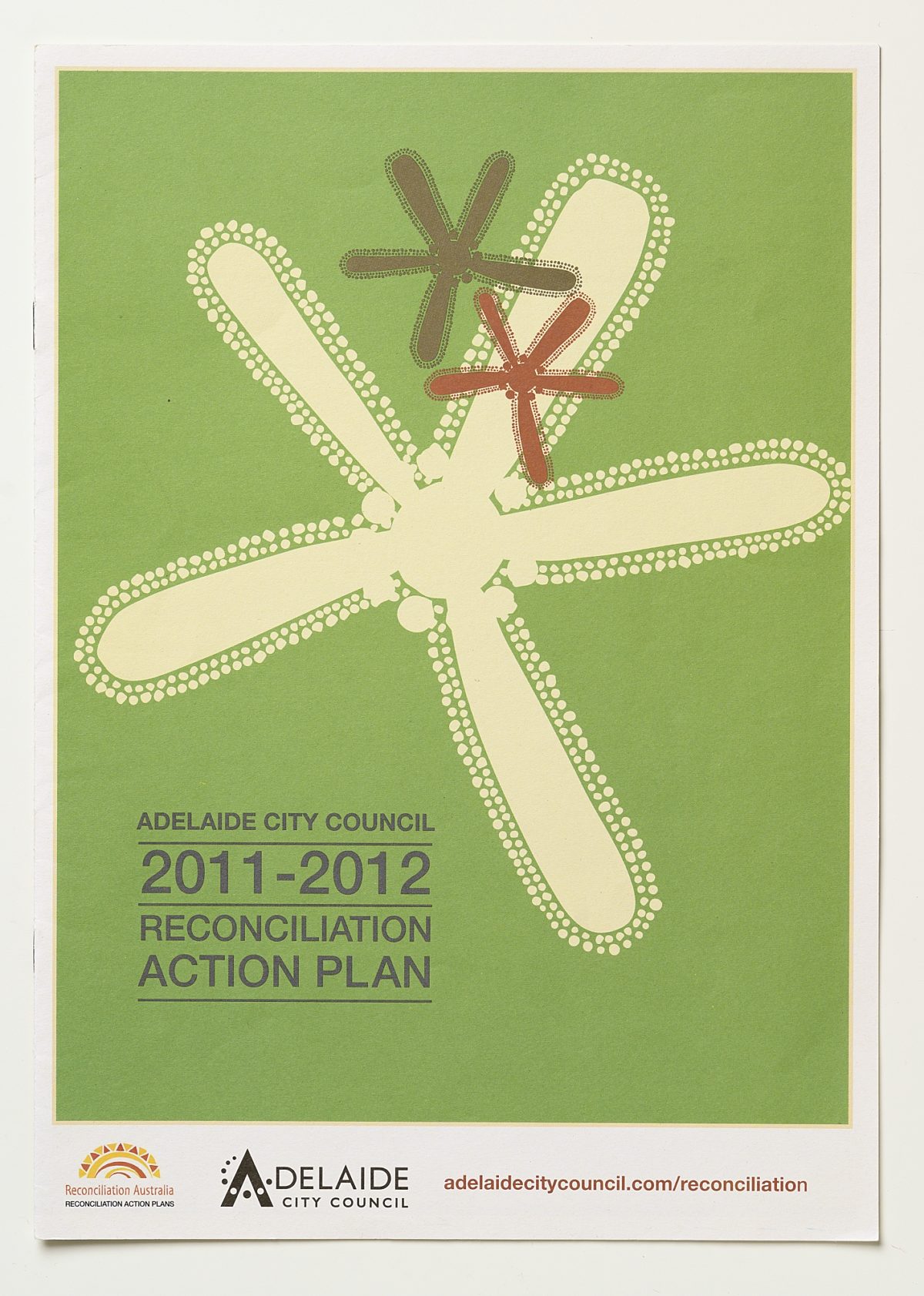
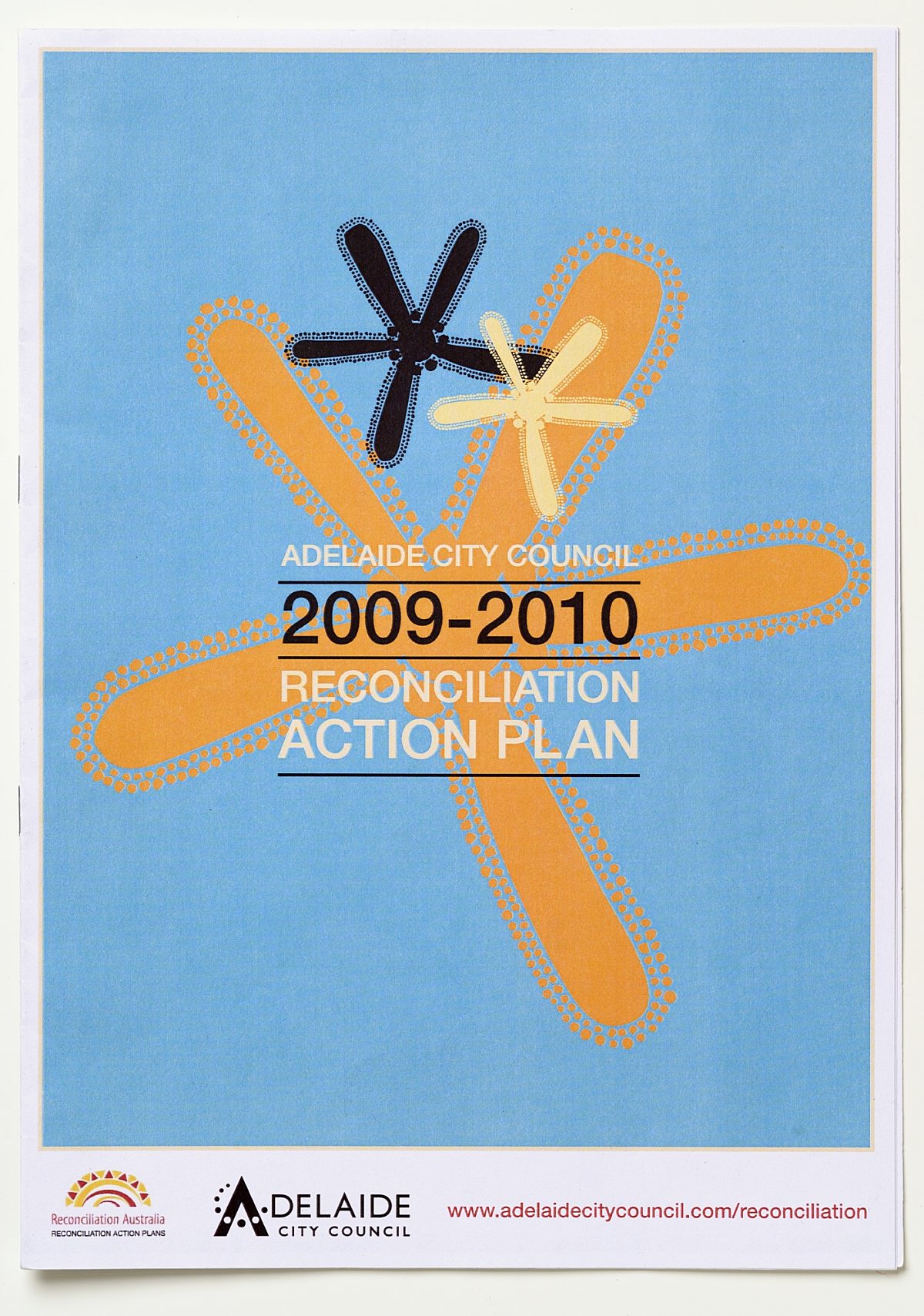
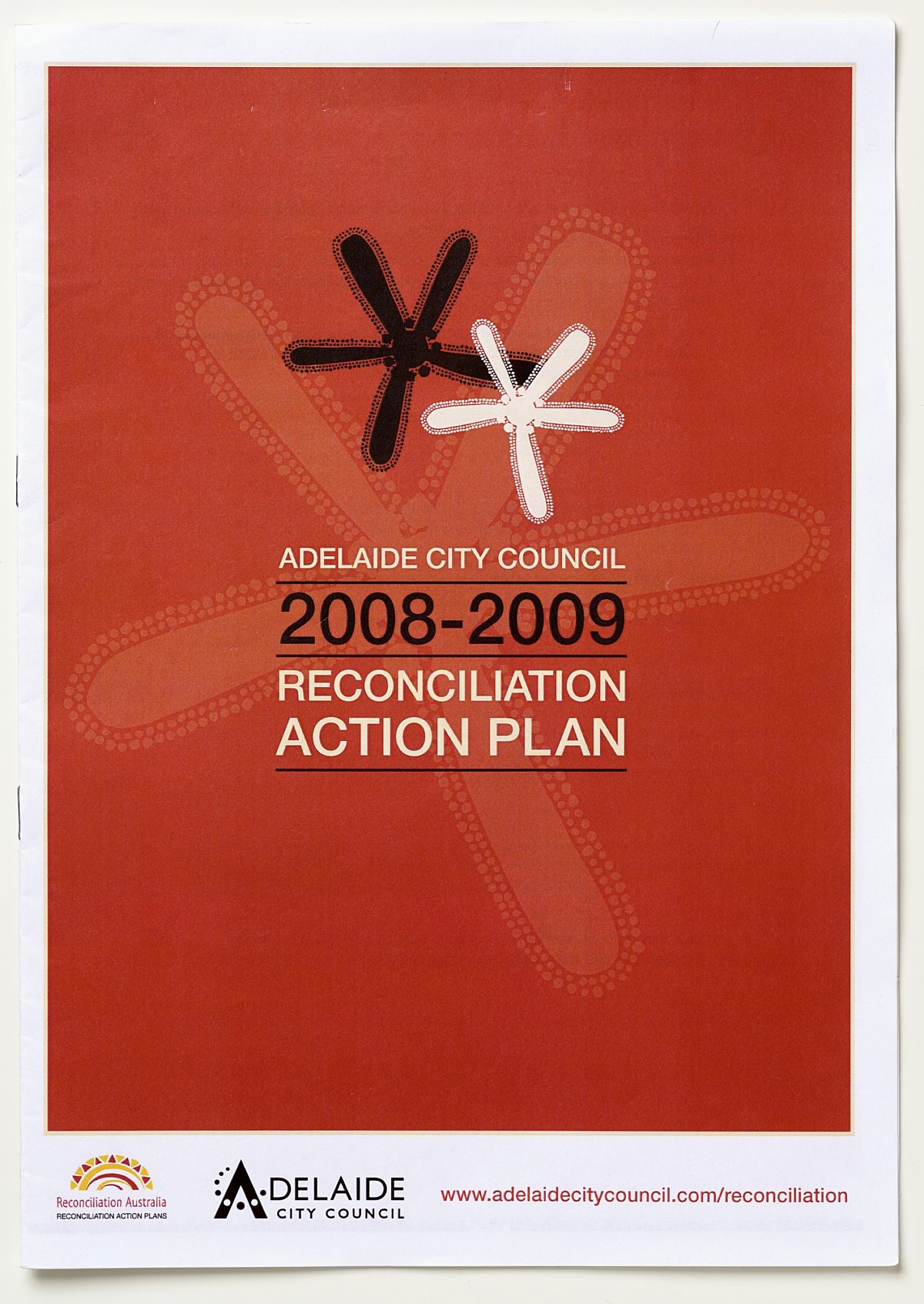
Examples of previous Reconciliation Action Plans include:
Our tenth RAP!

The City of Adelaide is excited to announce our tenth RAP! Making this Stretch RAP 2021–2024 our third Stretch RAP. Reconciliation Australia (who manage the RAP program) also recognises our long term commitment in the RAP program and are excited to highlight that the City of Adelaide is the first Local Government in Australia to reach ten RAPs in total! Consolidating Council’s long standing commitment to reconciliation with Aboriginal and Torres Strait Islander peoples, together we have achieved many wonderful initiatives with positive outcomes, creating visual and physical landscapes that educate and raise awareness of Aboriginal peoples in the life of the city.
Previous Reconciliation Action Plans



Reconciliation in action
Actions speak louder than words. This is certainly the case for reconciliation. The City of Adelaide demonstrates its ongoing commitment to reconciliation in a number of ways. These initiatives demonstrate the firm commitment by the City of Adelaide to reconciliation in our city.
In a historic decision in 2002, the City of Adelaide Council amended a 100-year-old tradition and introduced a Kaurna acknowledgement statement, to be read by the Lord Mayor, as the first item of business at every council meeting.
NAIDOC Week is a week-long celebration of Aboriginal and Torres Strait Islander history, culture and achievements, held annually in July. It is open for all Australians. Since its inception in 2017, each year the City of Adelaide hosts a community celebration in Rundle Mall.
Launched in 2015, the Mankurri-api Kuu / Reconciliation Room is in the Adelaide Town Hall.
Aboriginal and Torres Strait Islander community groups are welcome to register to use Mankurri-api Kuu free of charge on weekdays, between 9:00 am to 5:00 pm. The room is available on weekends on application.
In 2013, the City of Adelaide began redevelopment work on Victoria Square/Tarntanyangga.
The overall shape of the redeveloped area was based on the Wokali, or Kaurna Shield. The wokali is a bark shield cut with stone chisels from the outer bark of mature river red gum (Eucalyptus camaldulensis), which was used by the original people of the Adelaide Plains. The surface was coated in white pipe-clay and decorated with opposing arcs of red ochre. A pliable wooden handle was fixed to the shield through the central holes.
Recognising the significance of Victoria Square / Tarntanyangga as a place of meeting to both Aboriginal people and white settlers, the council then named the central road running through the area Reconciliation Plaza.
Four flag poles were installed at Reconciliation Plaza. The flag poles create public awareness and enable celebration of Aboriginal cultures in Victoria Square / Tarntanyangga.
In May 2016, City of Adelaide worked with with Warriapendi School to create four reconciliation banners to be flown at the entrance and exit points of Reconciliation Plaza, Victoria Square / Tarntanyangga.
Taken from the Reconciliation Action Plan (RAP) the City of Adelaide’s Aboriginal Employment Policy and Action Plan builds on the council's commitment to the employment of Aboriginal people across the organisation. Through this policy, council demonstrates its commitment to the improvement of social and economic opportunities for Aboriginal people through employment and development opportunities.
Aunty Josie Agius
The City of Adelaide has named a park in the Adelaide Park Lands in honour of Josie Agius. The existing park and netball sporting facility space in Park 22 now honours the life and work of Aunty Josie Agius, a Narungga, Kaurna, Ngarrindjeri and Ngadjuri leader.
Aunty Josie is a fiercely independent woman, and a pillar of strength in the Aboriginal community, committed to sharing cultural knowledge with non-Aboriginal people.
During the 1970s, Auntie Josie became one of our state's first Aboriginal health workers, becoming part of a team that developed a cultural framework for how hospitals and community health services deliver services to Aboriginal people in our state.
From 1984 until 1991, Auntie Josie worked as an Aboriginal education worker, helping to launch the Port Adelaide-based Kurruru Indigenous Youth Art Centre which is still successfully operating today.
She was appointed the NAIDOC Aboriginal of the Year in 1990 and was inducted into the South Australian Women's Honour Roll in 2009. In 2014 she was awarded the David Unaipon Award.
In 2014, Auntie Josie was also awarded the Premier's NAIDOC award as an extraordinary South Australian whose outstanding achievements and activities have made a significant difference to the lives and welfare of Aboriginal people in South Australia.
Aunty Gladys Elphick
City of Adelaide has named a park in the Adelaide Park Lands in honour of Gladys Elphick. Park 25 in the western Park Lands is now known as Gladys Elphick Park / Narnungga.
Gladys Elphick is a prominent Kaurna elder of Kaurna and Narungga descent, best known as the founding president of the Council of Aboriginal Women of South Australia (1964-73), which became the Aboriginal Council of South Australia in 1960s. She was known to the community as Aunty Glad.
The Council of Aboriginal Women of South Australia was established in order to improve the socio-economic position of South Australian Aboriginal people. Gladys Elphick was the Council’s first President and worked tirelessly alongside many influential Aboriginal women trailblazers, (Betty Watson, Margaret Lawrie, Maude Tongerie, Lowitja O’Donoghue and Faith Thomas to name a few) in order to establish vital services within the community. The influences of these women lead to the establishment of Nunkuwarrin Yunti, Tauondi College, and the Aboriginal Legal Rights Movement.
Aunty Alice Dixon
Alice Dixon is a Kaurna woman, known throughout Australia and internationally for her untiring struggle to expose and stop the deaths of Aboriginal and Torres Strait Islander people in custody. Alice was a loving mother and grandmother of seven children.
In 1992, a tree was planted in Victoria Square/Tarntanyangga to honour her memory. As part of the redevelopment of Victoria Square / Tarntanyangga a new tree (SA blue gum) was planted at a ceremony in on 8 December 2014. The tree is surrounded by a redgum seat with sculpted hands and a plaque.
Alice joined the National Committee to defend Black Rights (CDBR) in 1987. In 1989, Alice was elected to the National Executive of the CDBR. She represented CDBR at national and international conferences and as media spokesperson publicising continuing black deaths in custody and other injustices. Alice completed the University of New South Wales Diplomacy Training Program in order to monitor the human rights abuses of Aboriginal people and highlight their occurrences in the United Nations and other forums.
Alice was motivated by a love for her people and humankind. Her commitment to unity and determination to stop others from suffering the same fate as her son motivated her work with everyone from the imprisoned to police officers.
Alice was named Aboriginal Woman of the Year in Adelaide. Her strength inspired countless people, black and white, to join the struggle for justice. Alice also worked with the SA Aboriginal Deaths in Custody Watch Committee.
In working with all people, including those responsible for the suffering of her family and people, she showed us the humanity in others.
Council's Community Development Grants provides funding support to Aboriginal and Torres Strait Islander and other groups and communities to convene reconciliation events and activities in the city.